Basic 101 To Run Your Business


I met with a prospect business owner client yesterday who has been running his family business for 30 years.
His hairs were white and his face were lined with wrinkles. Evidences of his years of hard work and dedications in his passionate business.
He told me how successful he has been in his family business, but when I asked him if he can go away for a 1-month holiday without worries and that his business will still go on. He replied “Definitely Not! “.
Then I asked him another question ” Can your business continue to flourish without you for another 30 years?”. He replied “Very hard”.
The conversation was then pointing towards Basic 101 of running his business…
I noticed many business owners are running their business with their hearts (passions), Hard work but not so much with their Heads…
I would like to share more here …
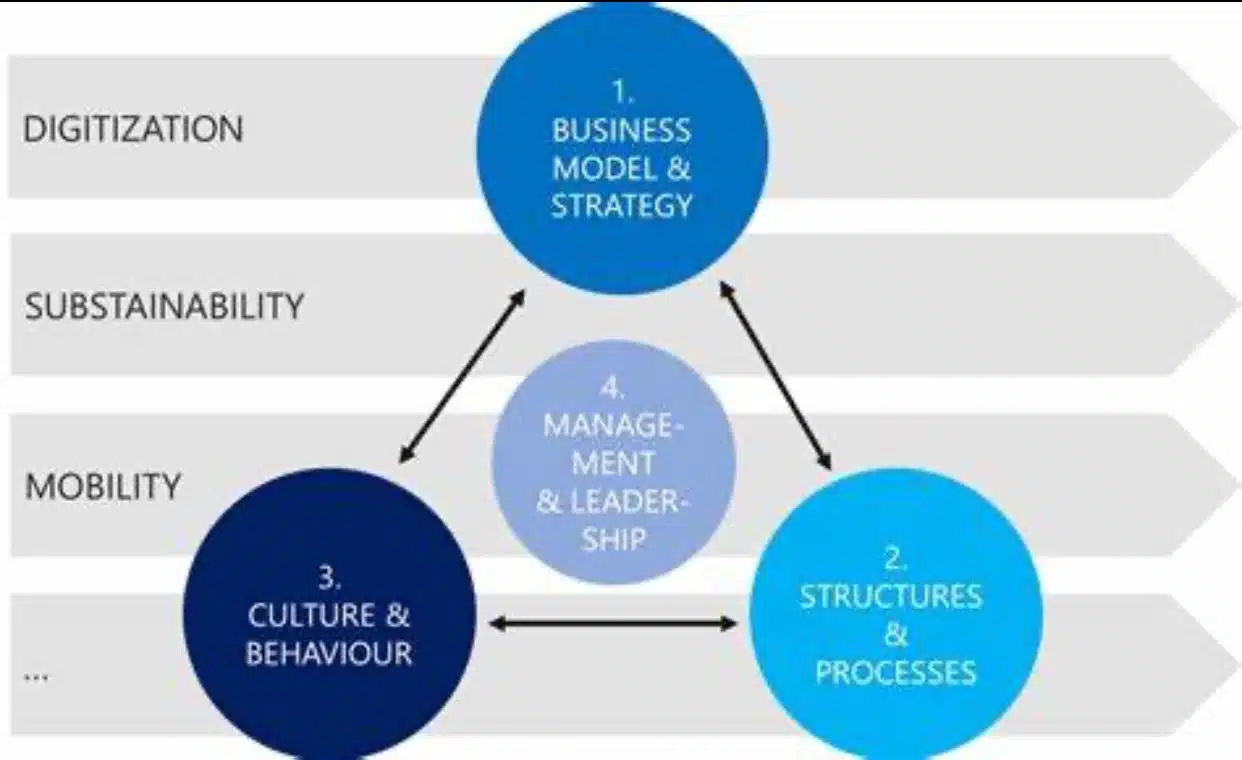
For a business to be sustainable, business owners need to put in place these 4 pillars :
1. Succession Planning
No business owner is a Superman.
No country can guarantee continued growth if the current government can not replace itself with capable hands over time.
We call this Replacement Process – “Succession Planning”.
Succession Planning :
* is a process for identifying and developing new leaders who can replace old leaders when they leave, retire or die.
* In business, it entails developing internal people with the potential to fill key business leadership positions in the company.
* Succession planning increases the availability of experienced and capable employees that are prepared to assume these roles as they become available.
* Taken narrowly, “replacement planning” for key roles is the heart of succession planning.
* Effective succession or talent-pool management concerns itself with building a series of feeder groups up and down the entire leadership pipeline or progression.
* In contrast, replacement planning is focused narrowly on identifying specific back-up candidates for given senior management positions.
* Fundamental to the succession-management process is an underlying philosophy that argues that top talent in the corporation must be managed for the greater good of the enterprise.
* Succession planning is a process whereby an organization ensures that employees are recruited and developed to fill each key role within the company.
* Through your succession planning process, you recruit superior employees, develop their knowledge, skills, and abilities, and prepare them for advancement or promotion into ever more challenging roles.
* Actively pursuing succession planning ensures that employees are constantly developed to fill each needed role.
* As your organization expands, loses key employees, provides promotional opportunities, and increases sales, your succession planning guarantees that you have employees on hand ready and waiting to fill new roles.
2. Company Reporting Structure
A Business Owner must be supported by his capable “lieutenants”, and in turn these “lieutenants” to be supported by their respective operating “soldiers”.
No business owner can fight a War himself.
* Reporting structure refers to the authority relationships in a company — who reports to whom.
* For small businesses with only a couple of employees, that structure is often self-evident: Everyone reports to the owner. With enough new employees, though, coordinating everyone’s efforts will likely demand a formal organizational structure.
* This framework establishes who is in charge of different tasks, departmental areas and the organization as a whole.
* These authority boundaries and the relationships among people in authority serve to create the reporting structure.
* This Company Reporting Structure is usually illustrated with the use of an Organization Chart.
* An organizational chart is a pictorial representation of a company’s structure and reporting relationships.
* This chart can provide a great deal of information and may help organizational members understand the overall structure of the organization and its strategy.
3. Job description
Every position in the Organization Chart exists with its own reasons in order to support the company objectives and business plans.
We call these “reasons” Job Descriptions.
Job Description :
* is a list that a person might use for general tasks, or functions, and responsibilities of a position.
* It may often include to whom the position reports, specifications such as the qualifications or skills needed by the person in the job, and a salary range .
* Job descriptions are usually narrative, but some may instead comprise a simple list of competencies; for instance, strategic human resource planning methodologies may be used to develop a competency architecture for an organization, from which job descriptions are built as a shortlist of competencies.
4. Workflow
Just like a good football team where every player knows exactly who to pass the ball to when he catches the ball based on well thought-out ball passing strategies.
On a similar note, a well run company needs to define various Workflows to be efficient, to reduce redundancies and to have clear deliverable(s) from every work process, ie, remove meaningless work processes which only adds Time and Cost, but not adding Value and Meaning.
Meaningful Workflow :
* consists of an orchestrated and repeatable pattern of business activity enabled by the systematic organization of resources into processes that transform materials, provide services, or process information.
* It can be depicted as a sequence of operations, declared as work of a person or group, an organization of staff, or one or more simple or complex mechanisms.
* From a more abstract or higher-level perspective, workflow may be considered a view or representation of real work.
* The flow being described may refer to a document, service or product that is being transferred from one step to another.
* Workflows may be viewed as one fundamental building block to be combined with other parts of an organization’s structure such as information technology, teams, projects and hierarchies.
Hope the above Basic 101 of running your business helps.
The above looks simple, but it’s an Art to make them work. Sun Tze (孙子兵法) has more on the above 101.
Eg, An Organization Chart may change the following year when the Business Plan changes, and the Business Owner should be fluid and adaptable enough to change his company’s Organization Chart in order to “change” his war formation to attack next year’s “enemies”.
Good Luck !
If you need help, feel free to contact us at :
(O) +65 63851011
(M) +65 90880669